The 2025 HealthShare Guide
The Essentials of HealthShares: A Comprehensive Guide
Understanding HealthShares
What is a HealthShare?
A HealthShare is a non-profit organizaion where members contribute a set monthly amount that is pooled within the community to help share each other’s helathcare costs. It is important to note that HealthShares are not health insurance but rather an alternative that operates on a peer-to-peer basis. This structure allows members to join a community with shared beliefs or principles, agreeing to specific guidelines to be eligible for cost-sharing. HealthShares primarily share eligible medical expenses from unexpected illnesses or injuries, but many also offer programs for services like maternity, preventive care, telemedicine, and prescription discounts. Along with monthly contributions, members pay pre-share amounts and, in some cases, co-shares, yet they can still save up to 50% compared to traditional health insurance. Eligible expenses are determined and shared according to each HealthShare’s guidelines.
How do HealthShares work?
HealthShares are member-based organizations where members agree to shared beliefs and principles, sometimes including lifestyle choices. Members pay a monthly contribution that is pooled together to share eligible medical expenses with other members. When a member incurs a medical expense, they submit a sharing request, which the HealthShare evaluates against its guidelines. If approved, the expenses are shared using pooled contributions. Members are also responsible for a pre-share amount—similar to a deductible—referred to as an Initial Unshareable Amount (or similar term), before sharing begins. Not all medical expenses are eligible for sharing, so members should be prepared for potential out-of-pocket costs and understand the sharing process.
Where do HealthShares fit within healthcare?
HealthShares are a cost-effective alternative to traditional insurance, with membership options ranging from basic to comprehensive care. Many provide add-on services, allowing members to customize programs to fit their unique needs. While there are some limitations, HealthShares share eligible medical costs for pre-existing conditions after a waiting period. Memberships can serve as a primary healthcare option, supplement insurance, or temporary solutions for eligibility gaps. They also complement Direct Primary Care (DPC) memberships, expanding services beyond major medical events. Unlike insurance, members can choose their providers, and while some HealthShares use networks, there is still flexibility to see any provider, though it may come with additional costs. Employers can also find money-saving options with tailored programs to meet their business’ needs.
When is a suitable time to switch to a HealthShare?
There is no enrollment period to become a member of a HealthShare. Individuals, couples, or families can join anytime throughout the year by completing an online form. Membership typically begins after the application is approved; however, some begin on the first of the month following approval, while others let members choose their start date. Some companies even offer immediate start dates, a 30-day trial, or assign the start date after the application is submitted. It is important to understand the differences between HealthShares and traditional health insurance, particularly regarding eligibility guidelines, coverage, sharing, and financial obligations.
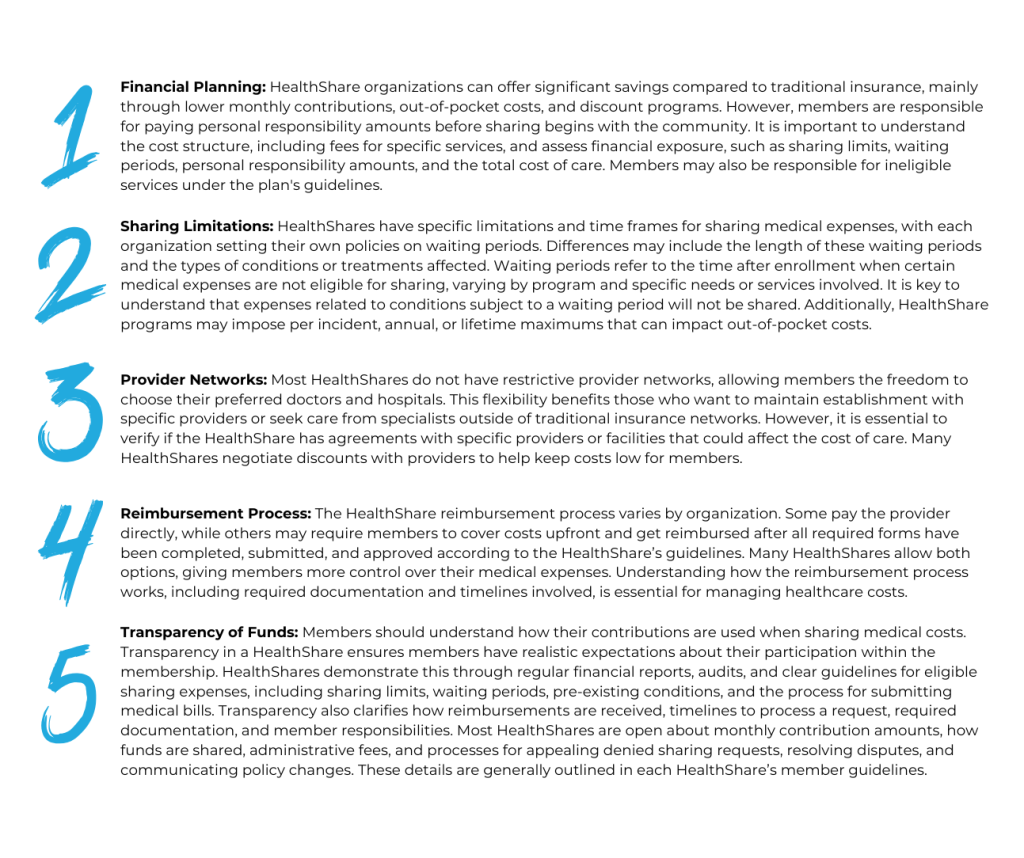
Five things you need to know about HealthShares
Clarifying Common HealthShare Myths
Clarifying the myths surrounding HealthShares is essential for individuals, couples, families, and businesses to make informed healthcare decisions. Misinformation about benefit programs, legality, and operational processes can lead to confusion, unmet expectations, and frustration. Debunking these myths helps build a clearer understanding of how HealthShares operate, fostering greater trust and confidence in HealthShare organizations.
Top Three HealthShares by Category
The information presented in this section is derived from a comprehensive review of official HealthShare member guidelines, published program details, reviews, and member testimonials. Additionally, third-party websites, forums, and blogs offer comparisons and reviews of HealthShare programs, drawing on member feedback and thorough research. Independent review platforms and some HealthShare organizations also feature member stories that offer valuable insights into the effectiveness of these programs. Each category lists the top HealthShares, selected based on member satisfaction, sharing efficiency, reimbursement, and customer service. Note: Each HealthShare program has its own guidelines, waiting periods, and specific limits that determine the scope of sharing.
Category: Cost
Monthly contributions, pre-share amounts, and, for some HealthShares, co-shares and provider fees contribute to the overall cost structure of HealthShare memberships. These costs vary based on age, household size, and membership type. Sharing limits are also considered when evaluating medical needs and budgets. Bottom of Form
Christian Healthcare Ministries (CHM) was the first HealthShare to offer a community-based sharing program in the United States. They provide a variety of memberships from basic services to comprehensive care, including a senior program for members 65+. CHM is known for a strong member support team and reliable reimbursement. Although they have a $125,000 sharing limit per illness/incident, their add-on program called CHM Plus extends this limit for some programs and provides unlimited sharing for CHM Gold members.
Note: The Personal Responsibility (PR) is the amount that each membership unit must pay each year. There is also a minimum Qualifying Amount (QA) per illness/incident which is the amount each illness/incident must total. The PR must be met, and the QA must be reached before medical cost sharing begins with the community.
Zion HealthShare provides both basic and comprehensive programs, customizable by pairing with Direct Primary Care (DPC) and add-on options, with no annual or lifetime limits. They have the fastest turnaround time for processing sharing requests, easing members’ financial burden. Zion HealthShare receives excellent reviews for customer support, helping members navigate medical costs. Their team negotiates expenses to obtain the best rates without compromising care. All ‘Additional Services’ listed below can be added to any membership.Bottom of Form
Note: The Initial Unshareable Amount (IUA) is the amount members pay when they incur eligible medical expenses before sharing begins with the community. Members will never pay more than three IUAs in a rolling twelve-month period.
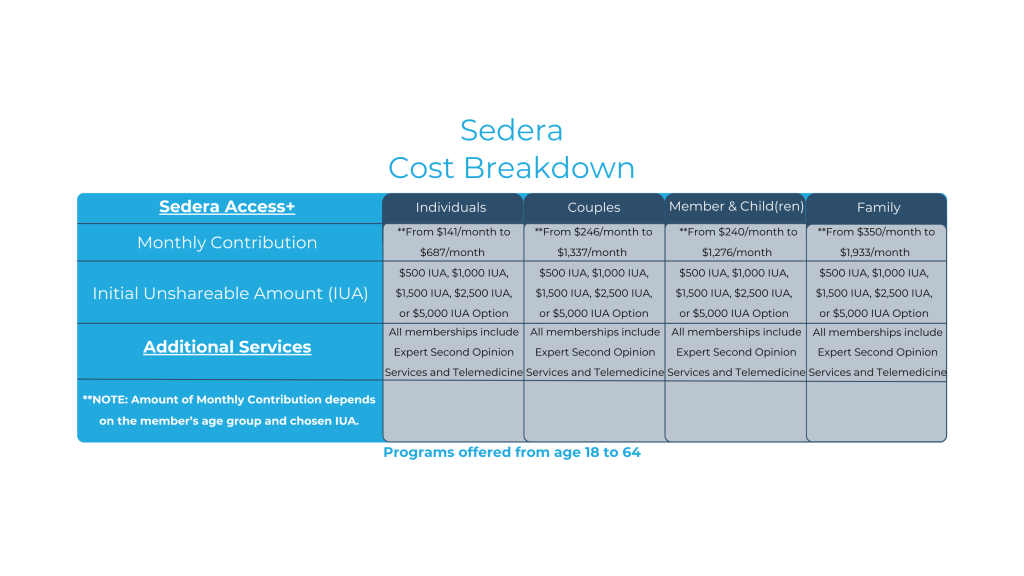
Sedera offers a wide range of programs designed to meet members’ medical and financial needs, including the option to pair with Direct Primary Care (DPC) for more comprehensive sharing. Eligible medical expenses are shared without annual or lifetime caps, except for certain medical conditions detailed in their member guidelines. Members report high satisfaction with Sedera’s advisor team, program flexibility, and provider choice. There are no religious restrictions, but members must adhere to certain ethical beliefs and commit to a healthy lifestyle. Sedera allows tobacco/vape use with an additional $75 monthly fee.
Note: The Initial Unshareable Amount (IUA) is the amount members are required to pay before the community begins sharing eligible medical expenses. Members will not pay more than three IUAs in one twelve-month period.
Category: Pre-Existing Conditions
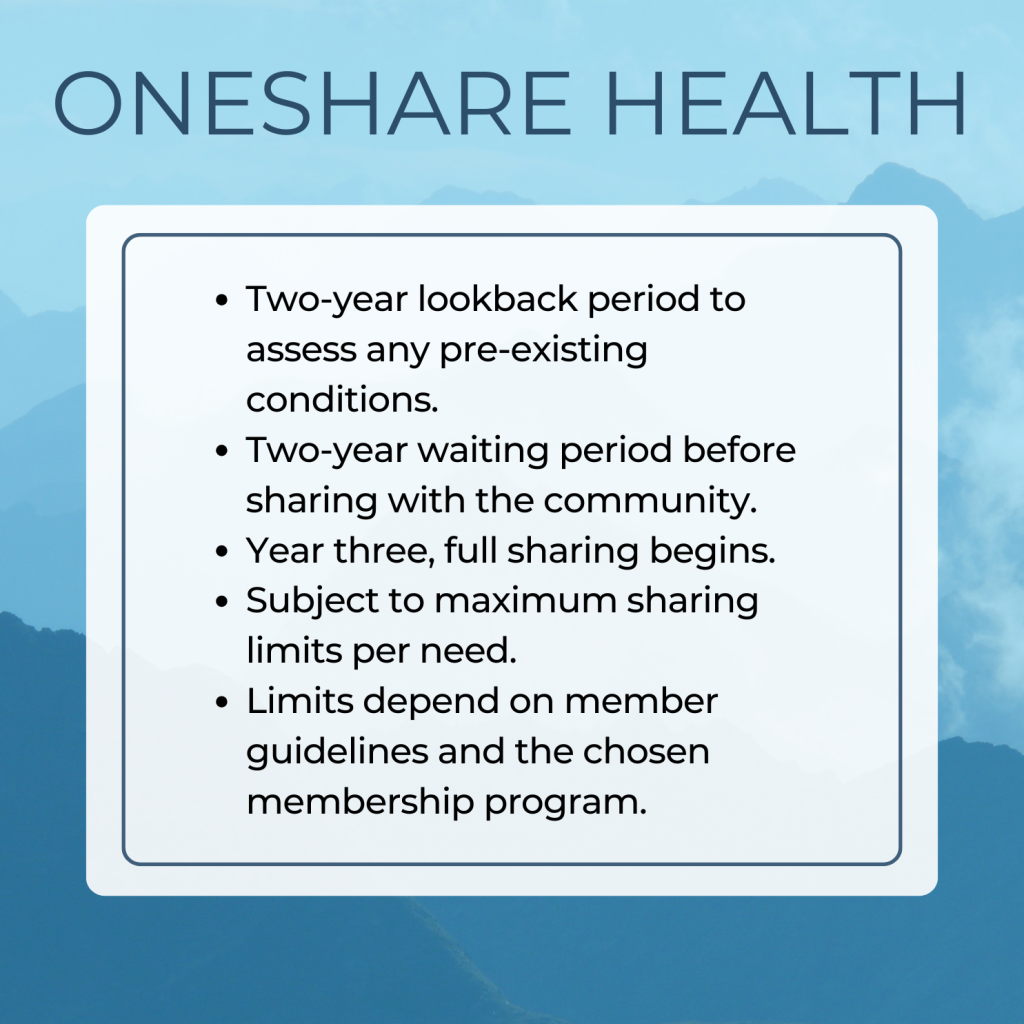
While no one is turned away for pre-existing conditions, each HealthShare follows its own unique guidelines, including specific regulations, limitations, waiting periods, and sharing processes. A pre-existing condition is any medical condition that existed prior to the membership start date. This includes conditions for which the member was examined, diagnosed, prescribed medication, showed symptoms, or received treatment.
Category: Maternity
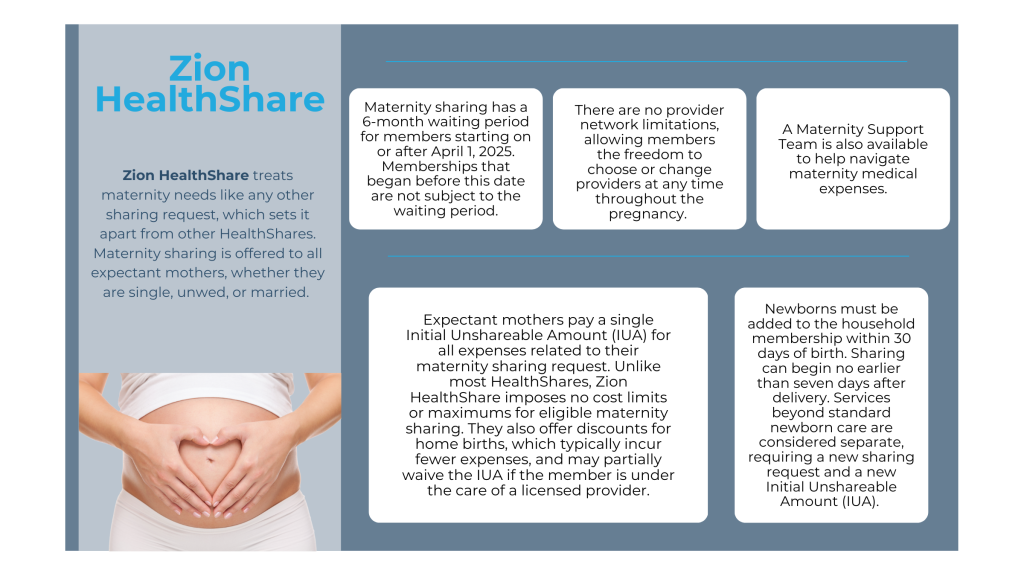
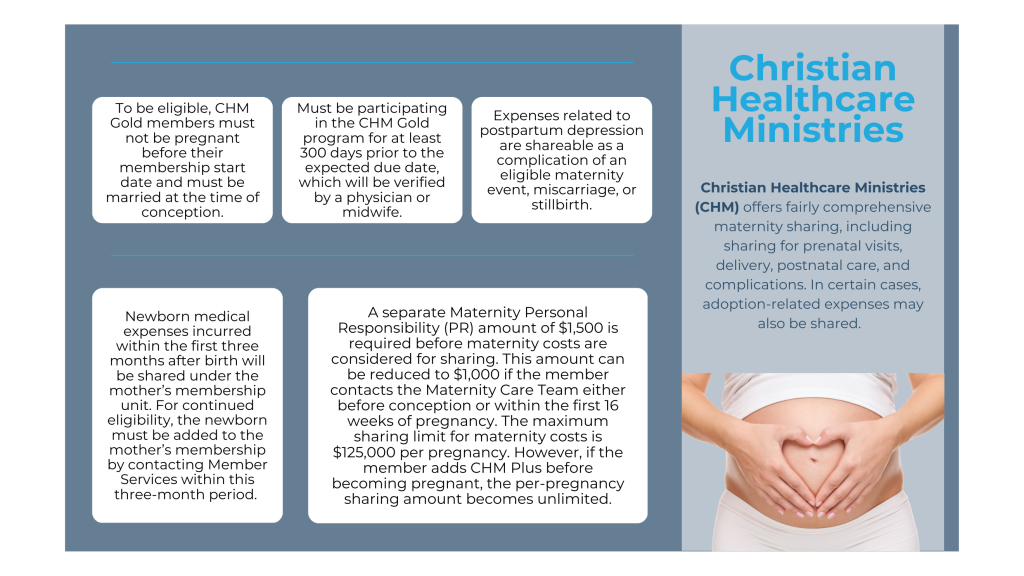
Expecting a child is an exciting time, but it can also raise concerns about medical expenses. While maternity sharing guidelines differ from one HealthShare to another, two common rules are consistent. First, conception prior to a member’s start date is not eligible for sharing, with conception dates confirmed through medical records. Second, for eligible pregnancies, maternity sharing includes prenatal care, delivery, postnatal care, and any possible complications for mother and baby. Additional maternity services vary based on the HealthShare and membership program.
Category: Prescriptions
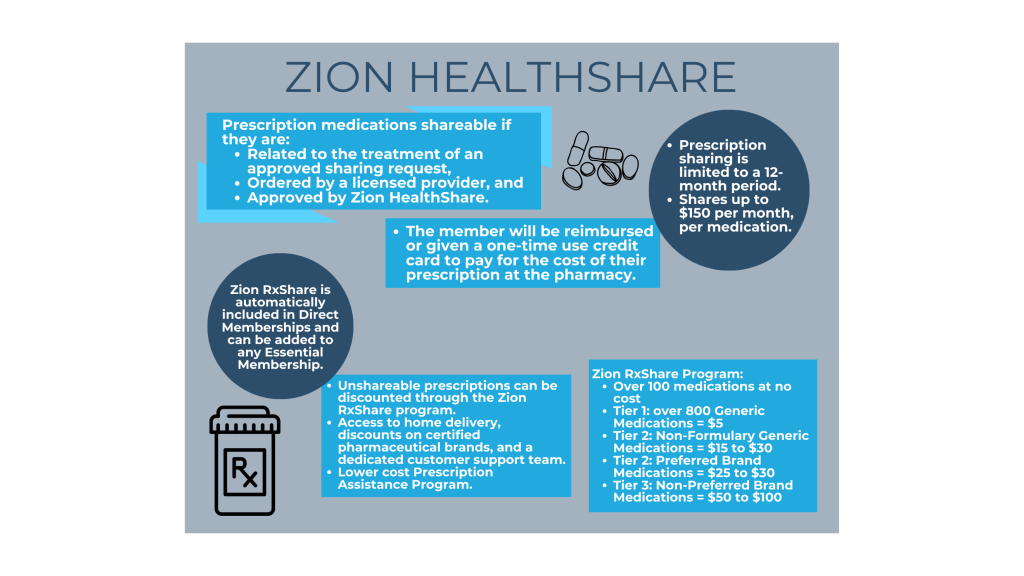
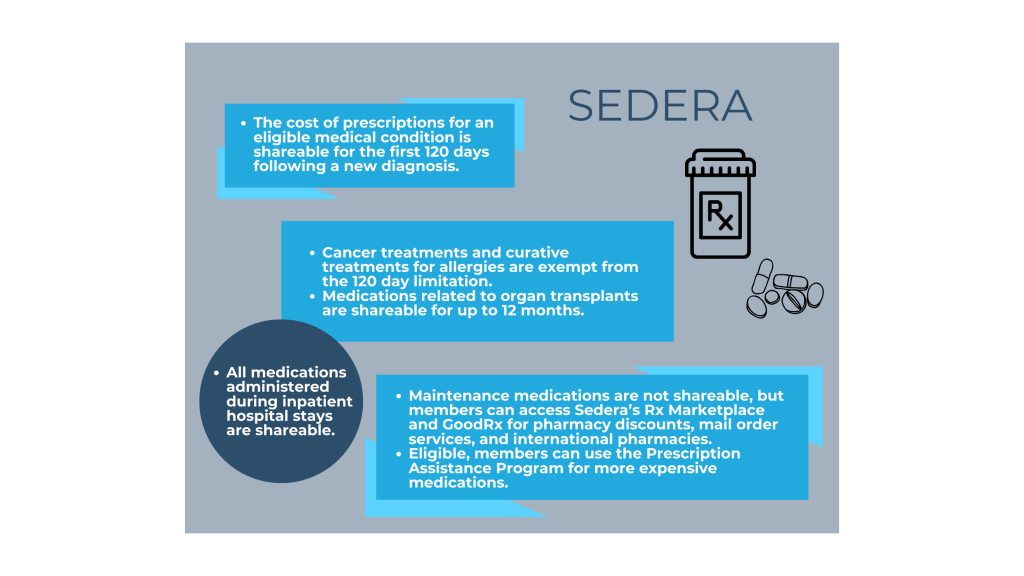
HealthShares can reduce costs through discount programs and limited prescription sharing for related eligible medical conditions. They may also partner with pharmacy discount programs for unshareable medications, providing drug discount cards for savings on certain prescriptions at participating pharmacies. Generic medications are encouraged as more affordable alternatives to brand-name drugs. For higher-cost and specialty medications, pre-authorization may be required. Prescriptions related to pre-existing conditions could have a waiting period before sharing becomes available.
Category: Wellness and Preventive Care
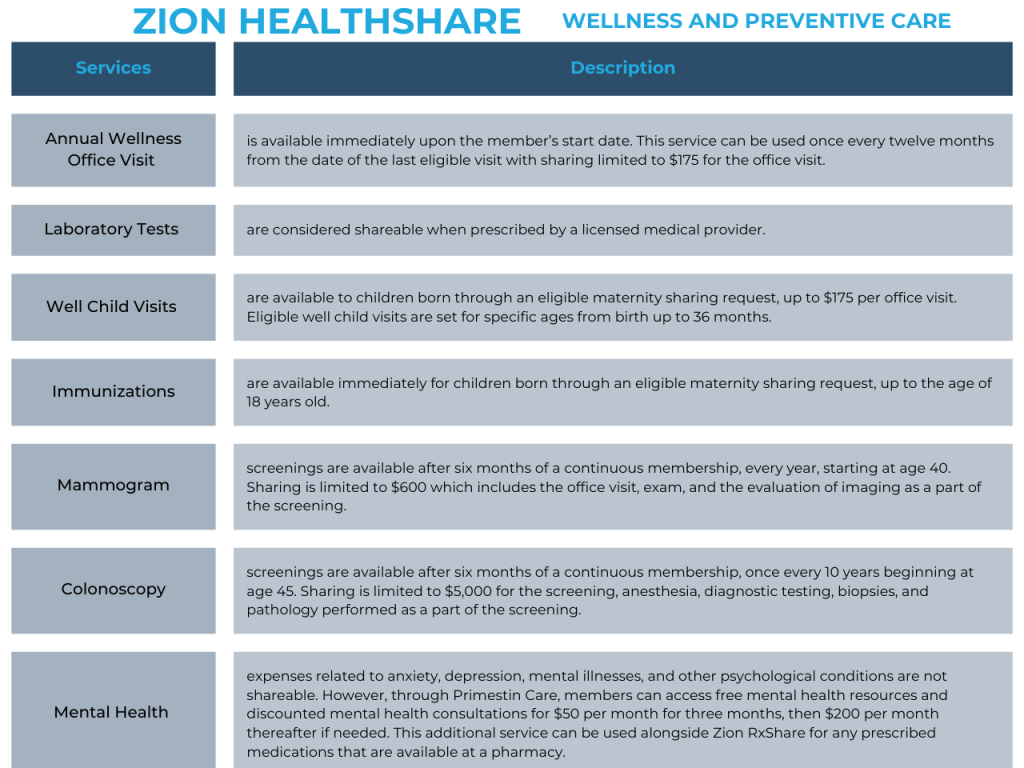
Preventive care helps detect potential health issues early, often before costly treatments become necessary. Wellness and preventive care within HealthShares may include one annual wellness visit per member, lab work, well child visits, immunizations (especially for children), screenings for mammograms and colonoscopies, and limited or discounted mental health services. Many HealthShare programs recognize the long-term benefits of promoting wellness and offer reimbursement or discounts for this type of care.
Zion HealthShare offers a variety of health, wellness, and preventive services that are included in their memberships, with mental health available as an affordable optional add-on feature. Some services are available immediately, while others have a brief waiting period.
Impact Health Sharing offers various wellness and preventive programs to promote healthy lifestyles and reduce healthcare costs. It is also one of the only HealthShare organizations that provide mental health sharing within the community.
Altrua HealthShare shares in a range of wellness and preventive services, with options that vary by program level. Some of these services fall under the member’s “pooled” office visits, allowing members to give unused office visits to others who are part of the same membership. Other services may be subject to a waiting period.
Category: Alternative Care
Alternative healthcare services are considered treatments that fall outside of conventional medicine. Many HealthShares recognize the value of holistic approaches, sharing in services like chiropractic care, acupuncture, and other therapeutic treatments that promote natural healing. By including alternative care options, HealthShares provide their members with more flexibility and choice, allowing them to explore diverse methods of maintaining their health.
Category: Senior Programs
Senior programs typically operate similarly to other membership programs, where members contribute monthly amounts used to pay for eligible medical expenses. Limitations may apply based on the member guidelines of each organization. Members aged 65 and older must have Medicare Parts A and B. For prescription costs to be eligible for sharing, members must also have Medicare Part D. All cost sharing will be secondary to Medicare.
Category: Employer Programs
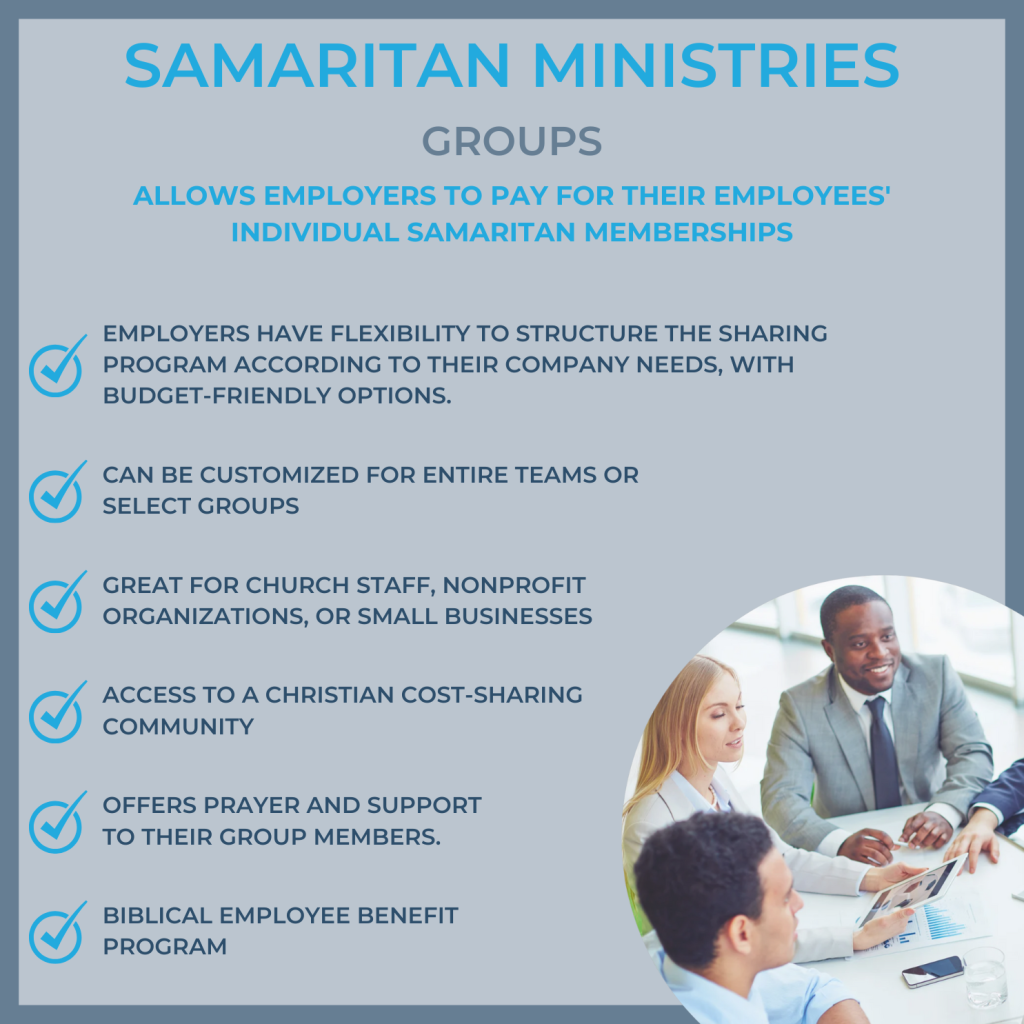
HealthShares offer a unique, community-driven approach to healthcare for companies and teams, often at a lower cost compared to traditional insurance. These programs enable employers to provide affordable, comprehensive healthcare options, with flexible memberships that can incorporate Direct Primary Care (DPC) and alternative treatments. This flexibility allows employers to tailor HealthShare programs to fit their team’s needs, providing healthcare sharing without the high premiums and rigid requirements of traditional insurance, while offering freedom to choose any provider without network restrictions.
Overall Top HealthShares:
#2 Sedera
Common Questions
Q: What is a HealthShare reseller? How do they impact me and my decisions?
A: A HealthShare reseller markets HealthShare memberships for established HealthShare organizations but does not directly manage or oversee the programs. Acting as intermediaries, they help individuals or businesses in joining a HealthShare. This can affect member experiences, as resellers may not have full control over the HealthShare’s operations. Information provided by resellers may sometimes be outdated, incomplete, or overly favorable, potentially influencing decision-making. Resellers can also transfer members between HealthShare programs without informing the member or obtaining approval from the HealthShare, leading to possible confusion, inadequate sharing benefits, and issues with reimbursements, as members may not fully understand the terms of their new program.
Q: Are there brokers or specialists who can help individuals find the best HealthShare program to suit specific needs?
A: Traditional health insurance brokers guide clients through complex insurance plans, but HealthShares operate on a simplified member-to-member sharing program, making brokers or agents less common. Most HealthShare organizations prefer direct member communication, although some may still utilize specialists to explain benefits and help guide individuals in selecting the best plan based on their healthcare needs, budget, and preferences.
Q: Which HealthShare programs offer cost sharing regardless of location?
A: Many HealthShares provide flexibility by sharing eligible medical expenses whether members are at home or traveling domestically or internationally. Many emphasize nationwide access to healthcare providers, and some even offer global sharing.
Q: When is the best time to inform my HealthShare that I will soon be eligible for Medicare?
A: Most HealthShares require members to notify them upon turning 65 years old, as this can affect their eligibility or membership terms. It is generally recommended to inform the HealthShare at least 30 to 60 days before the member’s 65th birthday to allow time for any necessary adjustments, such as transitioning to Medicare, changing to a different membership program, or in some cases, switching HealthShare companies.
Q: How does a Direct Primary Care (DPC) work with my HealthShare membership?
A: Direct Primary Care (DPC) and HealthShare memberships work together by addressing the different aspects of healthcare. DPC provides routine care, such as check-ups and basic treatments, through a monthly fee, providing personalized care without the need for insurance or co-pays. A HealthShare, on the other hand, helps with larger medical expenses like hospital stays or unexpected injuries or illnesses. Together, DPC manages day-to-day healthcare needs, while HealthShares handle major medical costs, creating an affordable and flexible alternative to traditional insurance.
Q: Does participating in a HealthShare qualify as having health insurance for tax purposes?
A: No, participating in a HealthShare does not qualify as having health insurance for tax purposes. HealthShares are considered an alternative to traditional insurance, and while they provide financial assistance for medical expenses, they do not meet the legal definition of health insurance under the Affordable Care Act (ACA). As a result, they are not eligible for tax benefits or exemptions that apply to health insurance plans.

HealthShare Definitions
In the HealthShare industry, several terms often need clear explanation, especially for those transitioning from traditional health insurance. Terms like Health Care Sharing Ministry (HCSM), health care sharing, health sharing, medical cost sharing, and HealthShare are often used interchangeably. However, while all HCSMs are HealthShares, not all HealthShares are HCSM’s.
Here are some commonly misunderstood or specialized terms:
HealthShare – A non-profit organization where members contribute monthly to share each other’s medical expenses. It operates on a community-based system of mutual support, guided by shared values or principles.
Eligibility – Conditions under which a medical expense qualifies for sharing.
Membership Guidelines – The rules and regulations members must adhere to in order to participate in a HealthShare, often involving lifestyle or moral requirements.
Self-Pay – When a member pays directly for medical services at the time of care and submits for reimbursement or sharing later.
Sharing Amount – The total amount of eligible medical expenses that members contribute to or share in.
Pre-existing Condition – Any illness, injury, or health condition that existed prior to joining the HealthShare program.
Direct Primary Care (DPC) – A healthcare program where members pay a monthly fee directly to their primary care provider for unlimited access, often used in conjunction with a HealthShare program.
Waiting Period – The timeframe a member must wait before certain conditions, treatments, or services are eligible for sharing.
Monthly Contribution – The fixed amount members pay into the HealthShare each month in order to be eligible to participate.
Pre-Share Amount – The out-of-pocket amount a member must pay before the HealthShare begins sharing medical costs, similar to an insurance deductible. This amount may go by different names depending on the HealthShare, such as Annual Unshared Amount (AUA), Initial Unshareable Amount (IUA), or Personal Responsibility (PR).
Medical Cost Sharing – The fundamental system of HealthShares where members contribute to a common fund to help share the costs of each other’s eligible medical expenses.
About HealthShare Guide
HealthShare Guide reviews and compares eleven different HealthShare companies, providing a comprehensive resource for consumers to explore the top-rated HealthShares in the industry. Individuals can gain insights into how each HealthShare operates and the services available to members. The site also features a comparison tool, allowing users to view a side-by-side comparison of these HealthShares.
Our reviews cover essential details such as how long each company has been in operation, headquarters location, and membership size. We evaluate customer satisfaction, growth trends, and provide an overview of each company’s programs, member responsibility amounts, limitations, processing times, eligible sharing benefits, and other important factors to consider prior to joining. Additionally, our review site showcases numerous customer reviews, assisting in the decision-making process.
Each HealthShare delivers valuable services to its members, and we encourage thorough research, as every individual and family has unique needs, just as each HealthShare offers unique solutions.
Below is an alphabetical list of the HealthShares reviewed and featured on HealthShare Guide: